Google’s Pixel lineup has always been about more than raw specifications. The company has traditionally focused on combining clean software, smart AI features, excellent photography, and a polished user experience, and the Pixel 11 Pro continues that philosophy while introducing several important hardware changes. After a relatively quiet period for smartphone launches, Google is bringing some meaningful upgrades to its 2026 flagship.
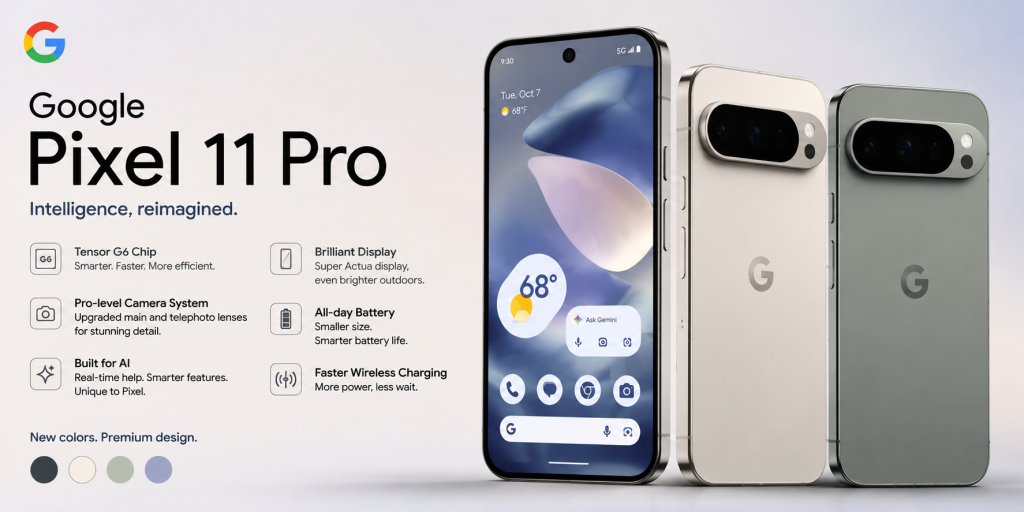
The Pixel 11 Pro arrives with the new Tensor G6 chipset, improved main and telephoto cameras, refinements to the display and build, and faster wireless charging. On paper, these changes make the phone look like a solid step forward from the previous generation. However, the story is not entirely positive. Google has also made some compromises, including reducing the memory available on the entry-level 128GB model, removing the temperature sensor, and using slightly smaller batteries. More importantly, the Pixel 11 Pro comes with a $100 higher starting price, which means buyers have every right to expect these upgrades to deliver a noticeable improvement in everyday use. The question, then, is whether Google has done enough to make the Pixel 11 Pro a compelling flagship in an increasingly competitive market.
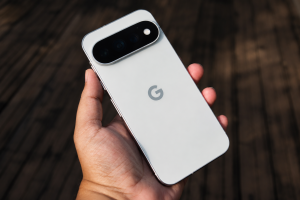
The design of the Pixel 11 Pro remains recognizably Pixel, but Google has made several refinements that give the phone a more polished and premium feel. Rather than completely changing the formula, the company has concentrated on improving the details, which makes sense for a mature flagship series. The build feels solid in the hand, while the updated display adds to the overall premium experience. A flagship smartphone is now expected to deliver more than just a sharp screen, and factors such as brightness, viewing comfort, responsiveness, and outdoor visibility all matter when using the phone throughout the day. The Pixel 11 Pro is also available in new color options, giving buyers a little more choice without moving too far away from Google’s understated design language. The packaging experience, however, remains fairly minimal. Inside the box, you essentially get the phone and a data cable, with the included cable limited to USB 2.0 speeds. That means users who need faster data transfers will have to purchase an appropriate cable separately. It is not necessarily a deal-breaker, but considering the premium price of the phone, some buyers may expect a more complete in-box experience. Key highlights include:
- Refined premium build and Pixel design
- Improved display experience
- New color options
- Minimal packaging with a USB 2.0 data cable
- Flagship-level construction designed for everyday durability
The biggest technical change this year is Google’s Tensor G6 chipset, and this is arguably the component that has the most potential to change the way the Pixel 11 Pro feels in everyday use. Google’s Tensor chips have traditionally focused heavily on AI and machine-learning capabilities rather than competing purely on benchmark numbers, and the G6 continues that approach. The chipset works alongside Google’s software to enable smarter features, improve computational photography, and make various parts of the phone experience feel more intelligent. What matters during everyday use, however, is whether the phone feels fast and consistent. Switching between applications, editing photographs, using demanding apps, multitasking, and interacting with AI features should all benefit from the newer platform. Google has also used the new processor to support camera improvements, which is important because Pixel photography has always depended heavily on computational processing. The combination of new hardware and Google’s image-processing algorithms should help the Pixel 11 Pro produce better results in challenging lighting conditions while also improving the overall responsiveness of the camera system. For users who care more about real-world performance than benchmark scores, this approach could ultimately be more important than simply having the fastest processor on a specification sheet.
Photography remains one of the strongest reasons to consider a Pixel phone, and the Pixel 11 Pro takes another step forward with upgrades to both the main and telephoto cameras. Hardware improvements are important, but Google’s real advantage comes from the way its software processes images. The Tensor G6 provides additional processing capability that can be used to improve detail, dynamic range, skin tones, low-light performance, and zoom photography. The upgraded telephoto camera is particularly interesting because long-range photography is an area where flagship phones continue to compete aggressively. A good telephoto system needs to preserve detail while maintaining natural colors and minimizing noise, especially when shooting in less-than-ideal lighting. Google’s computational photography can potentially make a significant difference here. The camera system is also expected to integrate closely with the phone’s AI capabilities, giving users more intelligent tools for editing and enhancing photographs. This makes the Pixel 11 Pro more than just a phone with upgraded sensors; it is a complete photography platform where hardware and software work together. For users who regularly take photographs, record videos, or want a dependable camera without manually adjusting complicated settings, this remains one of the Pixel’s biggest advantages. The camera experience is designed to make getting a good shot simple while still giving enthusiasts plenty of technology to explore.
Battery life and charging are where the Pixel 11 Pro presents a more complicated picture. Google has introduced faster wireless charging, which is certainly welcome, particularly for users who rely on wireless charging stands at home or in the office. Faster charging reduces the amount of time the phone needs to spend connected to a charger and makes quick top-ups more practical. However, the smaller battery capacity is difficult to ignore. A smaller battery does not automatically mean poor battery life because efficiency depends on the chipset, display, software optimization, and usage patterns. The Tensor G6 could potentially offset some of the capacity reduction through better efficiency, but this is one area where real-world testing matters more than specifications. Heavy users will naturally want to know whether the Pixel 11 Pro can comfortably last through a full day of photography, navigation, streaming, gaming, and mobile data use. The higher price also makes this compromise more noticeable. At the same time, Google has removed the temperature sensor and thermometer feature found on the previous generation. While this will not matter to everyone, it is still a feature reduction that should be considered when evaluating the overall upgrade. The Pixel 11 Pro therefore feels like a phone that improves in several important areas while making a few strategic compromises.
Pros and Cons
Pros
- New Tensor G6 chipset
- Improved main and telephoto cameras
- Strong computational photography capabilities
- Refined premium design and display
- Faster wireless charging
- New color choices
- AI-focused software experience
- Clean and polished Pixel software experience
Cons
- $100 price increase
- Base 128GB model now has 12GB RAM instead of 16GB
- Smaller battery capacity
- Temperature sensor and thermometer feature have been removed
- Included cable is limited to USB 2.0 speeds
- Some hardware compromises may be difficult to justify at the higher price
Conclusion
The Google Pixel 11 Pro is an interesting flagship because Google has managed to deliver several genuine upgrades while simultaneously making a few compromises. The Tensor G6 chipset, improved camera hardware, refined display and build, and faster wireless charging give the phone plenty of reasons to attract attention. The camera system remains one of the biggest highlights, particularly for users who value point-and-shoot photography and Google’s computational imaging capabilities. At the same time, the smaller battery, reduced memory on the base model, removal of the temperature sensor, and $100 price increase make the upgrade harder to evaluate without considering the competition.
Ultimately, the Pixel 11 Pro is not a revolutionary redesign, nor does it need to be. Instead, Google has taken an already familiar flagship formula and concentrated on improving the areas that matter most: performance, photography, software intelligence, display quality, and charging. If the Tensor G6 delivers the efficiency and performance improvements promised and the upgraded cameras live up to Google’s reputation, the Pixel 11 Pro could justify its higher price. For Pixel fans looking for a refined 2026 flagship with excellent cameras and a software experience built around AI, this is still a phone worth taking seriously.